
7 facts you didn't know about the Great Southern Reef
1. It's more than 8,000 kilometres long
The Great Southern Reef stretches over 8,000 kilometres, from Western Australia, around Tasmania and up the east coast towards Brisbane. It covers around 71,000 square kilometres of ocean across five states, making it one of the largest temperate reef systems on Earth.
2. It only got its name in 2015
Until 2015, Australia's southern reefs had no shared name and almost no public profile. A team of Australian scientists coined "the Great Southern Reef" to give these reefs the identity the Great Barrier Reef has long enjoyed.

3. It has more seaweeds than the Great Barrier Reef has corals
The reef is home to more than 1,500 species of seaweed, which is more diversity in seaweeds than the Great Barrier Reef has in corals. It also hosts more than 700 species of fish and 1,000 species of sponge.
4. Most of its life is found nowhere else on Earth
More than 70% of the species on the Great Southern Reef live nowhere else in the world. On the Great Barrier Reef, that figure is only about 3%.

5. Some of its fish walk instead of swim
Handfish use their modified fins like hands to walk across the seafloor. There are 14 species, almost all found only in Tasmanian waters, and they belong to the world's most threatened fish family. The Red Handfish is down to around 100 individuals, making it one of the rarest fish on the planet.
6. Giant kelp can grow 60 centimetres in a day
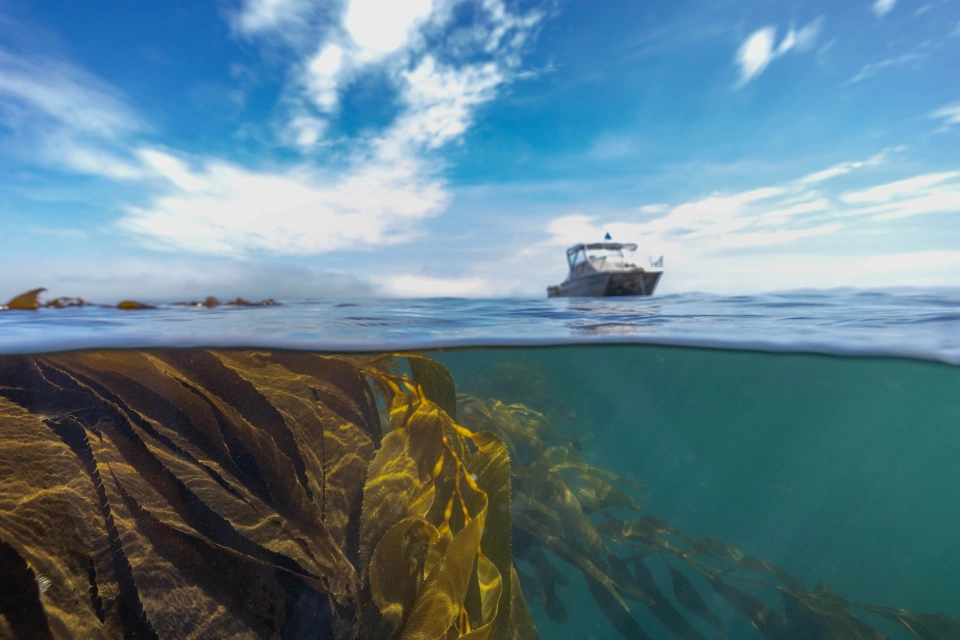
Giant kelp is one of the fastest-growing organisms on Earth, growing up to 60 centimetres a day and reaching 30 metres or more, as tall as a ten-storey building. These underwater forests give food, shelter and a safe nursery to fish, seadragons, crayfish and countless other creatures.

7. There's still so much to discover
The Great Southern Reef is one of the least studied major reef systems on Earth. Scientists estimate that thousands of marine species in these waters are yet to be discovered and described.
Sources
The Great Southern Reef Foundation
Bennett et al. (2015), The 'Great Southern Reef': social, ecological and economic value of Australia's neglected kelp forests
The Conversation - The Great Southern Reef is in more trouble than the Great Barrier Reef
CSIRO - An ocean forest in danger
1. It's more than 8,000 kilometres long
The Great Southern Reef stretches over 8,000 kilometres, from Western Australia, around Tasmania and up the east coast towards Brisbane. It covers around 71,000 square kilometres of ocean across five states, making it one of the largest temperate reef systems on Earth.
2. It only got its name in 2015
Until 2015, Australia's southern reefs had no shared name and almost no public profile. A team of Australian scientists coined "the Great Southern Reef" to give these reefs the identity the Great Barrier Reef has long enjoyed.
3. It has more seaweeds than the Great Barrier Reef has corals
The reef is home to more than 1,500 species of seaweed, which is more diversity in seaweeds than the Great Barrier Reef has in corals. It also hosts more than 700 species of fish and 1,000 species of sponge.
4. Most of its life is found nowhere else on Earth
More than 70% of the species on the Great Southern Reef live nowhere else in the world. On the Great Barrier Reef, that figure is only about 3%.
5. Some of its fish walk instead of swim
Handfish use their modified fins like hands to walk across the seafloor. There are 14 species, almost all found only in Tasmanian waters, and they belong to the world's most threatened fish family. The Red Handfish is down to around 100 individuals, making it one of the rarest fish on the planet.
6. Giant kelp can grow 60 centimetres in a day
Giant kelp is one of the fastest-growing organisms on Earth, growing up to 60 centimetres a day and reaching 30 metres or more, as tall as a ten-storey building. These underwater forests give food, shelter and a safe nursery to fish, seadragons, crayfish and countless other creatures.
7. There's still so much to discover
The Great Southern Reef is one of the least studied major reef systems on Earth. Scientists estimate that thousands of marine species in these waters are yet to be discovered and described.
Sources
The Great Southern Reef Foundation
Bennett et al. (2015), The 'Great Southern Reef': social, ecological and economic value of Australia's neglected kelp forests
The Conversation - The Great Southern Reef is in more trouble than the Great Barrier Reef
CSIRO - An ocean forest in danger
You might like...
Restoring kelp forests one plant at a time
Newsletter
Sign up for stories about Nature and conservation from amazing people and groups from around the world. Brought to you by our social enterprise, Kuno.